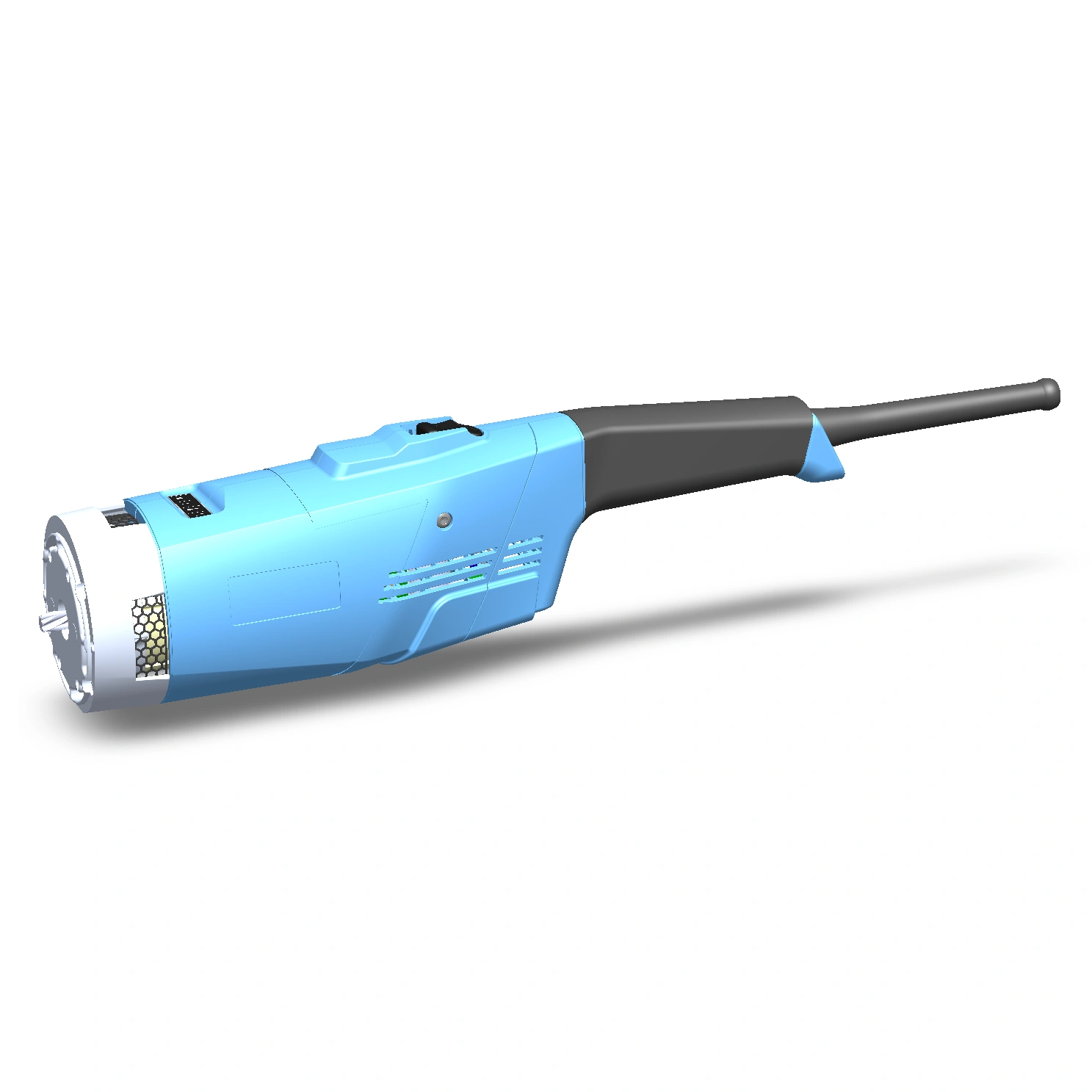
Today, highly efficient power tools and industrial applications almost exclusively use brushless DC motors (BLDC drives), for which there is a wide selection of standard components – ranging from control electronics to motors and gearboxes. However, these components quickly reach their limits as soon as space, design, or functional requirements become more restrictive. A modular system designed by Helbling makes it possible to develop a compact solution quickly and cost-effectively even in these cases.
When electrical devices are subject to tight space or design constraints, standard components are often found wanting. Many companies that want to use brushless DC motors (BLDC drives) in their products have found this to be the case. It also applies to handheld power tools, for example. The drivetrain must be compact, lightweight, and cost-effective – without compromising on performance, efficiency or thermal behavior. Control electronics should not include any unnecessary functions. The same applies to industrial applications that must be integrated in constrained spaces and under cost-sensitive conditions.
Customized drive solutions make all the difference
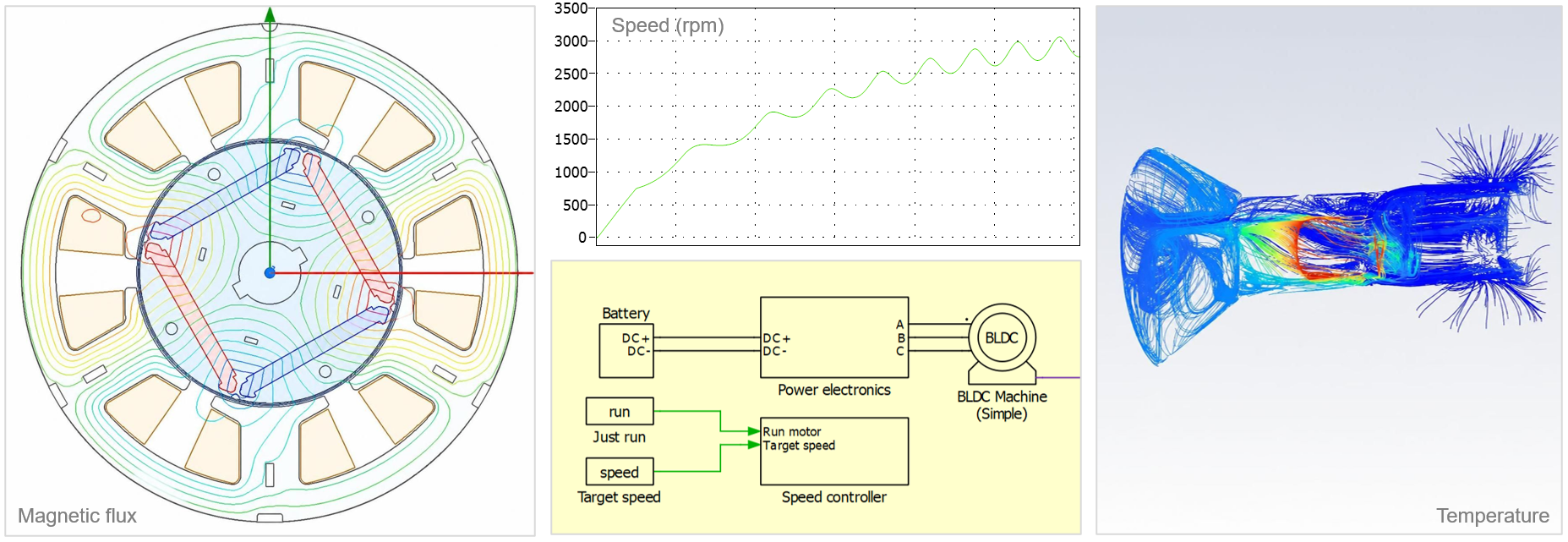
In this area in particular, off-the-shelf solutions often fail to meet the high-quality standards required by a company’s own devices. Manufacturers can benefit from a tried-and-tested modular system of firmware and electronic components developed by Helbling. This is complemented by expertise in simulation, control engineering, power electronics, and mechanics. In recent years, this approach has already led to the joint selection of optimal components and the development of custom-designed assemblies in numerous cases. Experience shows that, using this approach, it is possible to produce a prototype within three months. This process would otherwise take far longer. In particular, the latest tools and expertise in simulation offer a decisive advantage here: These include, first and foremost, dynamic system simulation, followed by thermal behavior simulation, and finally the option to perform magnetic field simulation.
Helbling focuses not only on products in the fields of industrial equipment and tools, but also on household, office, and commercial appliances. Ultimately, this expertise is of great importance for developments in diagnostics and laboratory systems. From an economic standpoint, this is already viable for annual production volumes that exceed single-unit manufacturing. The key pillars of this approach are described below.
A) Dynamic simulation of the mechatronic system
The foundation of an optimal design is a profound understanding of the application’s dynamic behavior. Dynamic system simulation models this behavior – from the power supply (battery pack or mains) through the electronics and motor to the mechanical behavior at the drive shaft. This clarifies the flow of energy from the source to the application. Current, voltage, power supply capacity, component sizes, and associated losses are identified, allowing for the systematic selection of appropriate components based on their load capacity and thermal behavior.
B) Thermal behavior and EMC
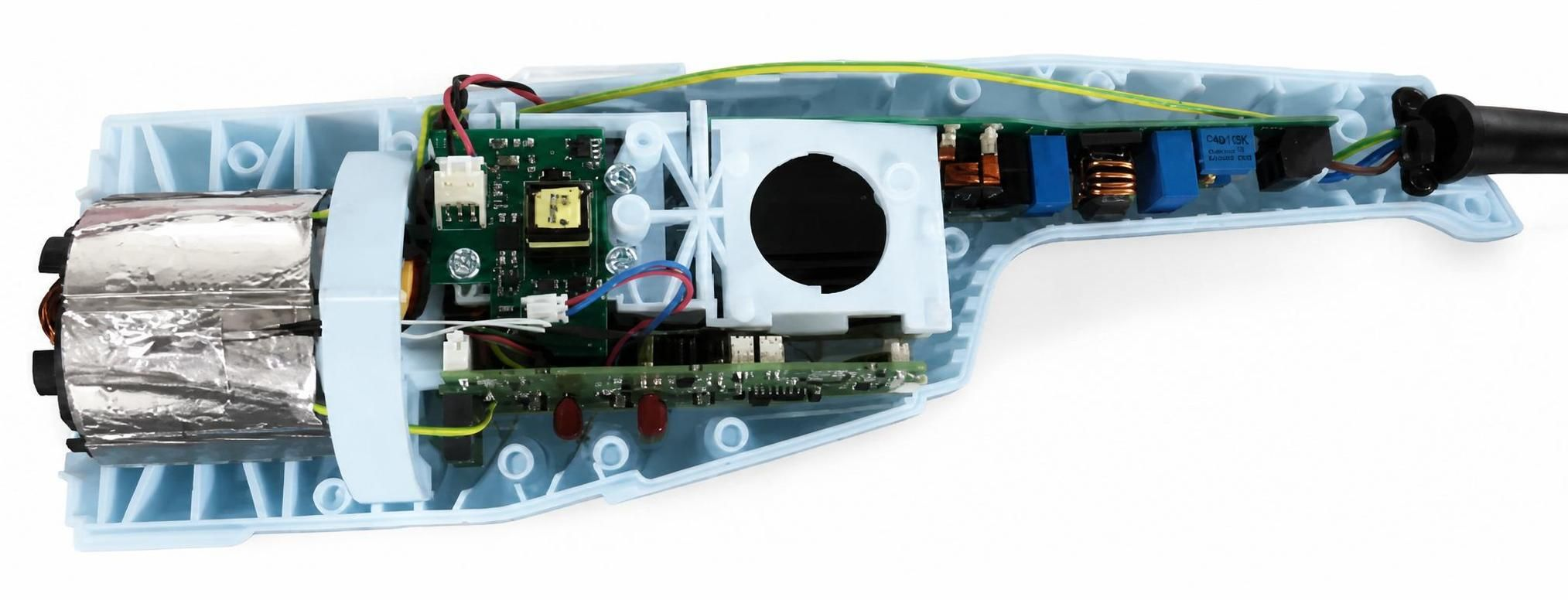
The tight, application-specific integration of drive components requires that special attention is paid to aspects such as thermal management and electromagnetic compatibility (EMC). After component selection and a proposed layout, thermal behavior and EMC are evaluated using a finite element method (FEM) simulation. This is followed by prototype manufacturing and testing in Helbling’s laboratory facilities, which include an in-house motor test bench and EMC laboratory – where intensive testing enables optimization.
C) Magnetic field simulation
Sometimes implementation fails due to standard components – for example, when coils, motors, or sensor arrays (Hall sensors) must meet specific requirements. In such cases, Helbling relies on magnetic field simulation to ensure optimal design.
D) Cost-effective electronics
The kit is based on the use of a microcontroller from the STM32C0 or STM32G0 family and current measurement. BLDC block commutation is performed either with (Hall sensor) or without sensors; peak current control is implemented in hardware. This significantly reduces the load on the processor and allows for the use of less powerful types, which have the added advantage of being more cost effective. The computing power freed up in this way is available for application-specific automation (state machines). At the same time, hardware-based current control enables dynamic speed or position control even during high-frequency load changes.
The firmware architecture is modular: a task scheduler and flexible data/parameter tables allow the addition of further sensor and control signals. This enables the drivetrain to be easily integrated into higher-level automation systems via serial commands.
E) Application-specific power supply
Depending on the requirements, the power supply is either connected to the grid via a power converter or provided by battery packs. Helbling develops application-specific battery packs that include protective circuitry and charge controllers.
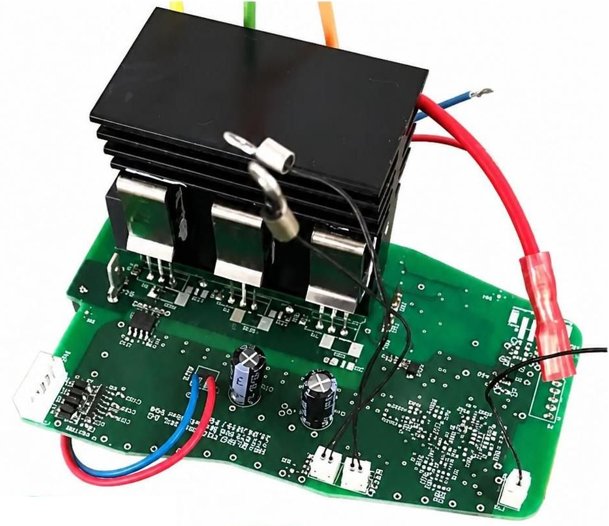
The drivetrain described above can be integrated optimally and cost-effectively in combination with any power supply, including custom-designed solutions if necessary. This increases the chances of success for customers who wish to develop mechatronic systems that must meet strict constraints and cannot be implemented using standard components.
Summary: Fast development times, high efficiency, and compact design deliver competitive edge
Electric drives must be optimized for the specific application of the device. Manufacturers can focus on their core areas of expertise while utilizing highly efficient electric motors that are precisely tailored to their applications. With its interdisciplinary teams, Helbling is well-equipped to deliver customized, turnkey solutions within a short development timeframe.
Author: Antonio Castellino
Main Image: Helbling